The History of Hiking
Hiking has roots stretching back thousands of years, though it was not always considered a recreational activity. Early humans traveled on foot for survival, trade, migration, and exploration, often following trails that later became historic routes. In the 18th and 19th centuries, walking in nature began to evolve into a leisure activity, especially in Europe, where Romantic thinkers celebrated mountains and wilderness. By the late 1800s, hiking clubs began forming and trail systems expanded, turning walking in nature into a popular outdoor pursuit.

In the United States, hiking grew alongside conservation movements led by naturalists such as John Muir. The creation of national parks and long-distance trails like the Appalachian Trail helped shape hiking culture as we know it today. Modern hiking now ranges from short day hikes to multi-month thru-hikes, attracting people for fitness, adventure, and connection with nature. What began as necessity has become one of the world’s most popular outdoor hobbies.
Hiking Today
Today hiking blends history, recreation, and environmental appreciation. From local trails to iconic routes like the Pacific Crest Trail, hikers explore landscapes while also supporting conservation and stewardship. Many people hike for physical health, stress relief, photography, or simply the joy of being outdoors.
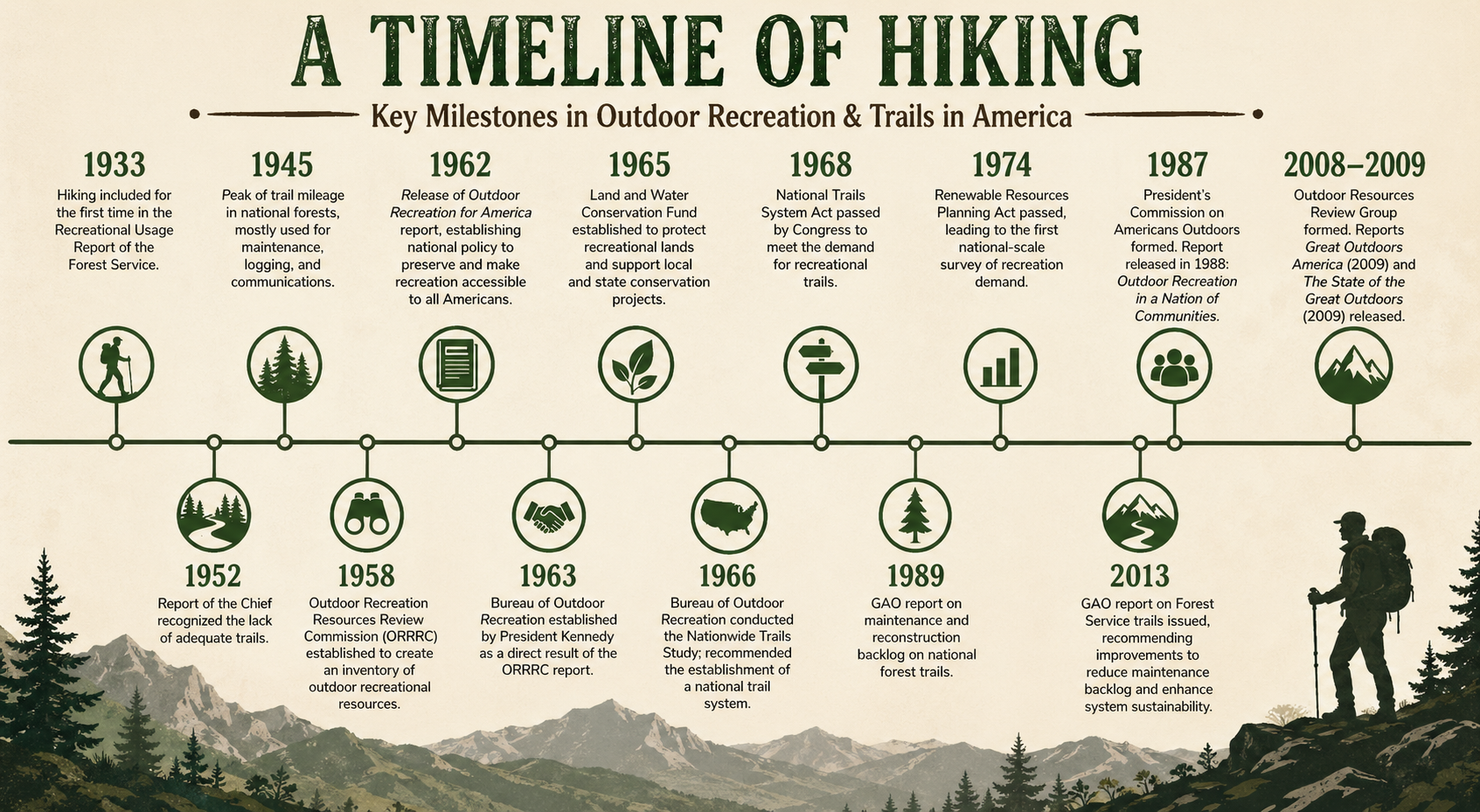
Historic Hiking Milestones